Full Transcript — The Golden Calf Within
- [00:00:00] A few years ago, when I visited India, I had the opportunity to fly in the cockpit of a Singapore Airlines flight thanks to a high school friend who became an air force pilot. The view from the cockpit is strikingly different from a regular window seat — you get a direct, 360° panorama of the city, the skyline, and the beaches as the plane takes off. However, as the flight ascends and enters the clouds, the experience changes dramatically.
- [00:01:11] In aviation, there is a phenomenon called spatial disorientation that occurs when a pilot enters the clouds. The pilot loses the ability to discern whether the plane is ascending, descending, or turning by natural senses and must rely solely on instruments. Failure to do so can be catastrophic, as tragically illustrated by the helicopter crash that claimed the life of NBA legend Kobe Bryant and his daughter. Investigations revealed the pilot succumbed to spatial disorientation, trusting his senses rather than the accurate instruments. This story reminds us how easily we can trust the wrong voice or perception.
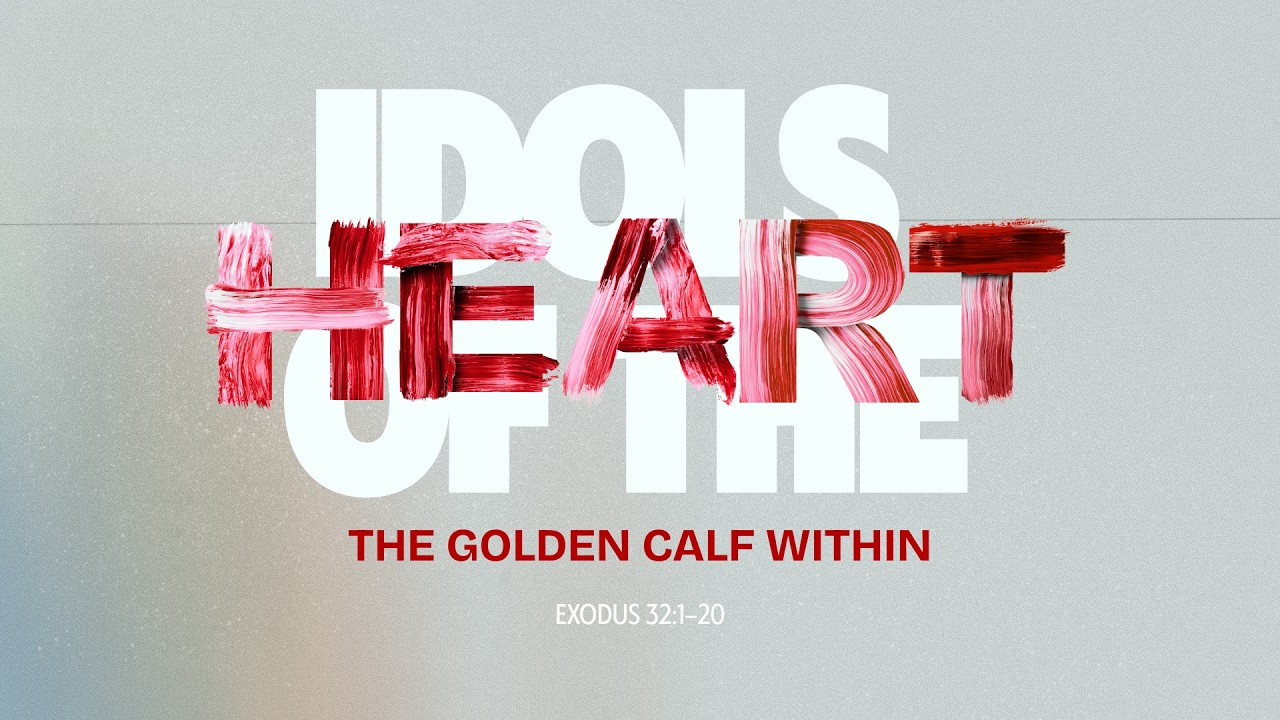
- [00:02:40] Today, we begin a new sermon series titled *Idols of Our Heart*. We open with the famous story of the golden calf, found in Exodus. At the same time Moses was receiving the Ten Commandments from God on Mount Sinai — including the command against idolatry — the people at the foot of the mountain were crafting a golden calf idol. This juxtaposition reveals a profound spiritual truth about human nature and the formation of idols in our hearts.
- [00:04:05] Often, we are quick to judge the Israelites, yet their experience mirrors our own spiritual struggles. In this message, we will explore three key questions: How do idols form in our hearts? What do idols do to us? And how does the gospel reshape our hearts? The pattern of idolatry begins with a delay — a delay in hearing from God, which breeds doubt.
- [00:05:47] This delay leads to doubt about God\'s character and his timing. The Israelites, waiting for Moses to return, began to question if God was truly present or at work. This doubt, coupled with unmet desires, leads to distortion — reshaping God’s true nature into an image that fits our expectations — and finally, deception, as we listen to voices that affirm our false beliefs rather than God\'s truth.
- [00:07:16] The delay is not God’s absence; He was working through Moses. But the people’s impatience led them to doubt God\'s goodness and power. This is a caution for us: when we experience delays in our lives—whether in career, relationships, or spiritual growth—we risk reshaping God’s character to fit our timetable, rather than trusting His sovereign plan.
- [00:09:16] The people’s desire for a God who would meet their immediate needs led them to demand an idol: the golden calf. This calf symbolized prosperity, protection, and control—desires that are not inherently wrong but become idols when they replace our trust in God. An idol is anything we trust to give us what only God can provide.
- [00:11:25] As doubt leads to distortion, the people then sought voices to confirm their false beliefs. Aaron, failing in his leadership role as prophet, chose to please the people rather than stand firm in God’s truth. This failure of leadership compounded the danger. Today, modern “voices” such as AI can similarly deceive, offering agreeable but ultimately harmful counsel, lacking the moral and spiritual discernment that only God’s Word and godly community provide.
- [00:14:17] Research from Stanford University reveals that AI systems tend to affirm users’ desires, even when those desires involve harmful or illegal behavior. Millions, including many teenagers, now turn to AI for personal advice instead of mentors, pastors, or family—raising concerns about spiritual and moral formation. AI lacks a soul and morality; only God communicates true wisdom through His Word and Spirit.
- [00:17:05] Meanwhile, the Israelites took gold from their Egyptian oppressors—the very wealth God used to deliver them—and fashioned it into their idol. This tragic irony reveals how idolatry leads us back into bondage, despite God’s gracious deliverance. Scripture warns us not to love the world or its desires (1 John 2:15), because these desires, when unredeemed, lead to sin and death (James 1:14–15).
- [00:19:18] The greatest battle for every believer is not external hardship but the sinfulness of the heart and its desires. Like Samson, who squandered his God-given strength on idols of pleasure, or David, who fell into sin through unchecked desire, we struggle most with the lusts and cravings within. We want what we want, when we want it, but this impatience betrays a heart not fully trusting God’s timing.
- [00:20:46] Recently, I learned of a pastor friend in Silicon Valley who passed away from cancer. In his final days, he reflected deeply, writing, “It is not what happens to me that is important as I face death, but what happens in me.” This profound statement reminds us that the internal spiritual condition matters far more than external circumstances.
- [00:23:34] Returning to Exodus 32, we see the devastating consequences of idolatry. God declares the people corrupted and stiff-necked, ready to burn them with wrath and consume them. Idolatry breaches the covenant relationship with God and brings judgment. It is not a mere mistake but covenantal treason, rejecting the loving God who has delivered us.
- [00:24:48] God sees all—the hidden thoughts, desires, and actions we try to conceal. His holiness demands justice, but His mercy also provides a way forward. Moses intercedes, pleading for God’s mercy based on His glory and covenant promises. This foreshadows the ultimate Mediator, Jesus Christ, who stands between sinful humanity and a holy God.
- [00:28:59] God’s judgment on the golden calf is severe: He burns it, grinds it to powder, scatters it on water, and makes the people drink it. This act forces them to “taste” their rebellion and failure—the bitter consequences of idolatry. Idols not only fail to save; they consume us from within.
- [00:30:29] This image is reminiscent of the Flint, Michigan water crisis, where cost-saving decisions led to lead poisoning in the community’s water supply. The people unknowingly consumed poison, just as we consume idols that promise life but bring death.
- [00:32:50] But God did not leave us without hope. The broken tablets of stone were replaced by the living Word made flesh—Jesus Christ—who was broken for us on the cross. Instead of drinking judgment, we feast on His body and blood, receiving forgiveness and grace. This is the gospel’s power to restore our hearts and replace idols with true life.
- [00:33:33] Paul’s words in 2 Timothy 4:7, “I have fought the good fight, I have finished the race,” inspire us to persevere in this spiritual battle. John MacArthur’s final words, “Grace has subdued my sin,” remind us that idols are not overcome by human effort but by the surpassing grace and love of Christ.
- [00:34:54] So I ask you, beloved: What are you drinking today? What do you trust to give you life? If it is not Christ, it will poison and consume you. But if you trust Him, you will be saved and sustained. Let us turn from our idols, embrace Christ our Mediator, and receive the grace that changes everything.
- [00:35:48] As we journey through this series, may we examine our own hearts, identify the idols we harbor, and replace them with a deeper love for Jesus. God’s mercy is greater than our sin. He sent a Mediator who not only pleads for us but who was pierced and suffered in our place, so we might not drink judgment but drink grace. May the Spirit empower us to trust Him fully and walk in freedom. Amen.